Ranks & Titles
Nobles, royalty, knights, military ranks, and guild grades

Serf / Outcast
Lesser最下層民 — The Lowest Stratum of Society
The lowest stratum in the social order. Slaves, descendants of convicted criminals, and members of stigmatized occupations — butchers, jesters, corpse handlers — all belong to this class. They receive almost no legal protection and are barred from owning land, receiving education, or practicing certain trades. In fantasy settings, they may be forbidden from using magic or conscripted by force.

Servant
Lesser使用人 — Those Who Serve Noble Households
A class employed by noble or wealthy merchant households to assist with daily life. Unlike serfs, servants receive wages and lodging under an employment contract, and their social standing shifts according to their master's prestige. The head butler of a grand estate may wield more practical influence than a minor noble. Roles are subdivided into attendants, butlers, cooks, grooms, bodyguards, and more.

Commoner
Lesser平民 — The Free People Who Form Society's Majority
The free class positioned between the nobility and the outcasts. It encompasses farmers, craftsmen, merchants, and fishermen among many others. Commoners may own or lease land, and receive basic legal protections alongside the obligations of taxation. Fantasy worlds frequently feature commoner-born adventurers and mages who rise to stand beside nobles — a testament to how often heroes emerge from this class.

Knight
Intermediate騎士 · Knight — Warrior of the Lower Nobility
The lowest rung of the noble hierarchy, a warrior class whose rank is earned through a sworn oath of fealty to a liege lord. Unlike other noble titles that are inherited, the knighthood can be conferred upon a commoner for deeds of valor or a lord's recognition — making it the most accessible path of social ascent. In fantasy worlds, numerous derivative classes exist, including the Paladin, Dark Knight, and Magic Knight.

Baron
Intermediate男爵 · Baron — The First Step of the Hereditary Nobility
The lowest of the hereditary noble titles. The baron governs a small domain and the peasants attached to it, and owes military service to a superior lord as a vassal. A barony typically spans one to a few villages, and the baron himself exercises seigneurial judicial authority. In fantasy settings, this is the rank most often cast as an early-arc villain or local power figure.

Viscount
Intermediate子爵 · Viscount — The Middle Noble Between Count and Baron
A middle-rank title above the baron and below the count. Historically developed from the role of a count's deputy, the viscount governs several domains and towns. This is the rank at which genuine participation in court politics begins; viscounts and above are often entitled to attend royal ceremonies and parliamentary sessions. In fantasy, this rank frequently appears as a figure redolent of intrigue and political maneuvering.

Count / Earl
Intermediate伯爵 · Count / Earl — The True Power Behind Regional Rule
The backbone of the feudal noble hierarchy. A count governs anywhere from a handful to dozens of domains, with multiple viscounts and barons as his own vassals. This is the first rank capable of exerting genuine influence over royal power through independent military and economic strength. It is also the title most famously associated with vampiric nobility — Count Dracula being the supreme example.
Marquess
Greater侯爵 · Marquess / Margrave — Noble Guardian of the Frontier
A high noble title ranking just below the duke. Originally born from the military role of guarding border territories — also called the Margrave — the marquess commands vast military authority as the commander of the kingdom's frontline defenses against foreign incursion. Within the realm, the marquess counts among the five most powerful individuals.

Duke
Greater公爵 · Duke — The Highest Noble, Second Only to the King
The highest noble title outside the royal family. A duke controls a substantial portion of the entire kingdom's territory and constitutes a semi-independent power with its own military, administration, and judiciary. Though nominally in a lord-vassal relationship with the king, in practice they are often near-equals at the negotiating table. In succession disputes, a duke's allegiance determines the outcome of wars.

Grand Duke
Greater大公 · Grand Duke / Archduke — The Highest Noble, Near-Royalty
The highest noble title, above the duke but below the king. Often held by rulers of small states or cadet branches of the royal bloodline, a grand duke governs territory that is effectively equivalent to an independent nation. The Habsburg Archdukes of Austria are the prime historical example; in fantasy, the grand duke is often portrayed as an imperial blood-relative governing a core province of the empire.

Crown Prince
Supreme皇太子 · Crown Prince — The Sole Heir to the Empire
The emperor's official heir. Holding the second-highest authority in the entire empire, the crown prince must be ready to assume governance at a moment's notice should the emperor be incapacitated. From childhood, he is trained in statecraft, military strategy, diplomacy, and — depending on the fantasy setting — magic. The tension between the crown prince's supporters and his opponents is the eternal theme of imperial politics.

Emperor
Spirit King皇帝 · Emperor — The Empire's Supreme Pinnacle, the Living Law Itself
The absolute pinnacle of secular power. As King of Kings, the emperor rules over multiple kingdoms, and his will becomes the law of the empire. Imperial authority is held to be divinely granted — the Divine Right of Emperors — and rebellion against the emperor was equated with rebellion against the gods. In fantasy worlds, the emperor is often a being of absolute power, or conversely, the towering symbol of authority the protagonist must bring down.

Lady-in-Waiting
Lesser侍女 · Lady-in-Waiting — A Woman Who Attends Noble Ladies
A female attendant who exclusively serves a highborn woman — a queen, princess, or noblewoman. Unlike ordinary servants, ladies-in-waiting are often drawn from noble houses themselves, giving them a unique dual identity as 'a servant who is also a noble.' The number of attendants and the prestige of their houses served as a measure of the mistress's own status. The First Lady-in-Waiting to a queen wielded formidable influence at court.

Dame
Intermediate女騎士 · Dame — A Female Warrior Who Earned Her Title by Sword and Oath
A woman who has been formally invested with knighthood through the knight's oath. Historically rare, but in fantasy worlds she is a common figure in holy orders, royal guards, and magic knight corps. 'Dame' is the official title granted to female knights in the British chivalric system; in Eastern fantasy she appears as a female general, wandering swordswoman, or Hwarang warrior. The Dame is frequently portrayed as a character caught between the codes of chivalry and the social expectations placed on women.
Noblewoman
Intermediate貴婦人 · Noblewoman / Lady — The General Title for Noble Women
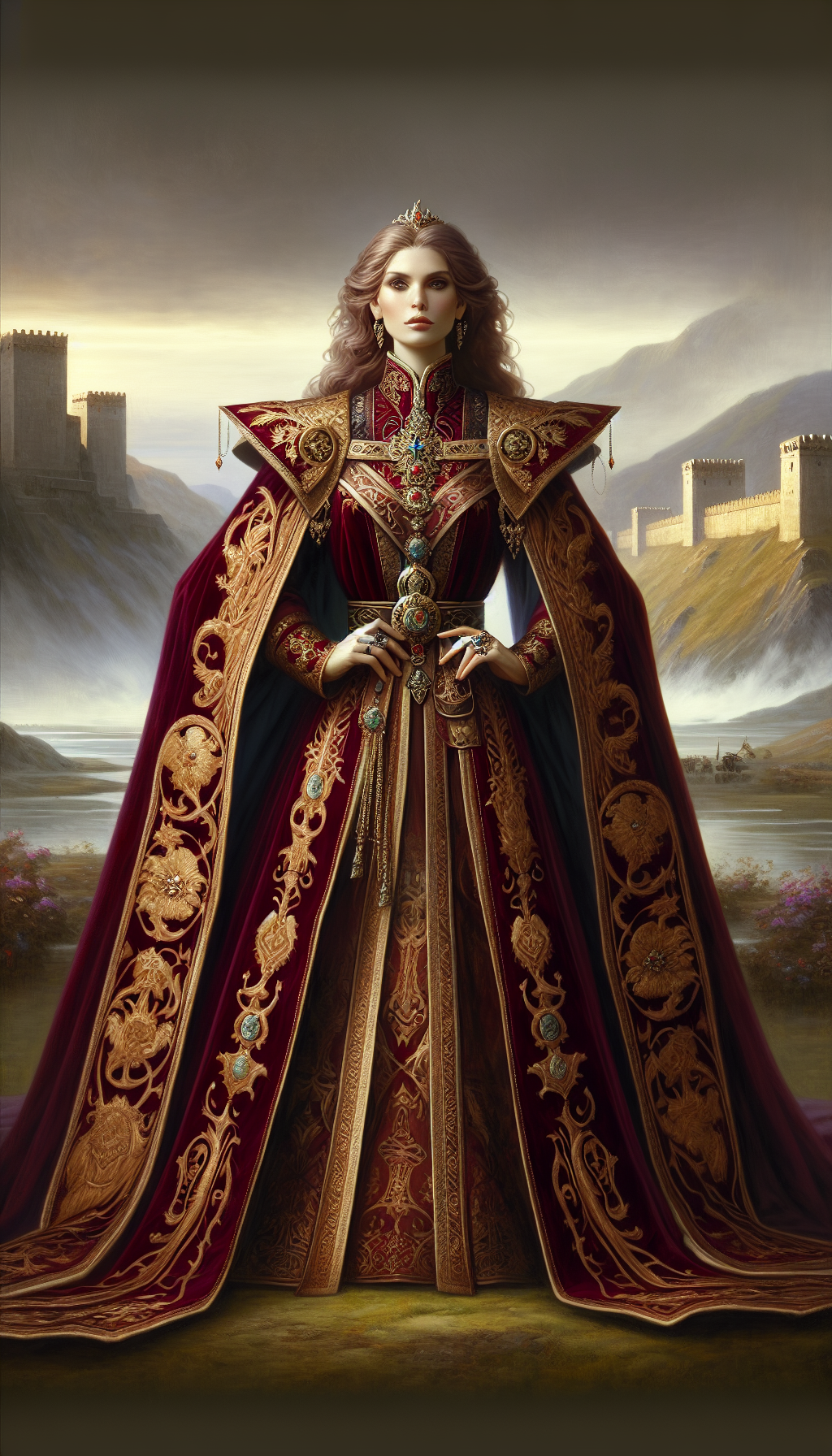
A collective title encompassing all women who hold or are connected to a noble title. The specific address varies with the spouse's rank — Baroness, Viscountess, Countess, Duchess, and so on. In some world settings, women may inherit titles in their own right, becoming independent domain nobles in their own names. In fantasy, the noblewoman is frequently depicted as a figure who conceals a razor-sharp political mind beneath a graceful exterior.

Holy Maiden
Greater聖女 · Saint / Holy Maiden — The Highest Religious Woman, Blessed by the Divine
A woman officially recognized by the church or religious institution as having received divine grace. It is common for a woman who performed miracles in life or died a martyr to be canonized posthumously, but in fantasy a living Holy Maiden is often depicted as a powerful being who manifests light magic, healing, and exorcism abilities in the present world. Her authority cannot easily be dismissed even by royal power, and she plays a symbolic role in boosting the morale of soldiers on the battlefield.

Princess
Supreme公主 · Princess — The King's Daughter, the Most Precious Bargaining Chip
The daughter of a king or emperor. A status conferred by bloodline rather than a hereditary title; her succession rights are often more restricted than a prince's. Yet in fantasy, the princess has been overwhelmingly reinterpreted not as a passive rescue target but as an active figure who takes up the sword, wields magic, or orchestrates political schemes herself. A princess's marriage sealed alliances between kingdoms — making the princess herself a 'living political asset.'

Queen Regnant
Supreme女王 · Queen Regnant — A Female Monarch Who Ascended the Throne in Her Own Right
An independent female monarch who ascended the throne in her own right — not as a consort. Distinguished from the Queen Consort, she is called the Queen Regnant. Historical exemplars include Cleopatra, Elizabeth I, and Queen Victoria. In fantasy, the queen regnant is often portrayed as a supreme character who combines magical ability with exceptional strategic genius — the absolute ruler of the kingdom and the apex of all the nobility.

Young Lady
Intermediate令愛 · Young Lady — The Unmarried Daughter of a Noble House
An honorific for the unmarried daughter of a noble household. 'Young Lady' (令愛) originally means 'your precious daughter' — a respectful term used when referring to another's daughter. It is the most frequently appearing female status in romance fantasy, used alongside the family's title as in 'the Young Lady of Baron House' or 'the Young Lady of Duke House.' A young lady's social standing depends entirely on her father's rank, and it is also a provisional status that lasts only until marriage.