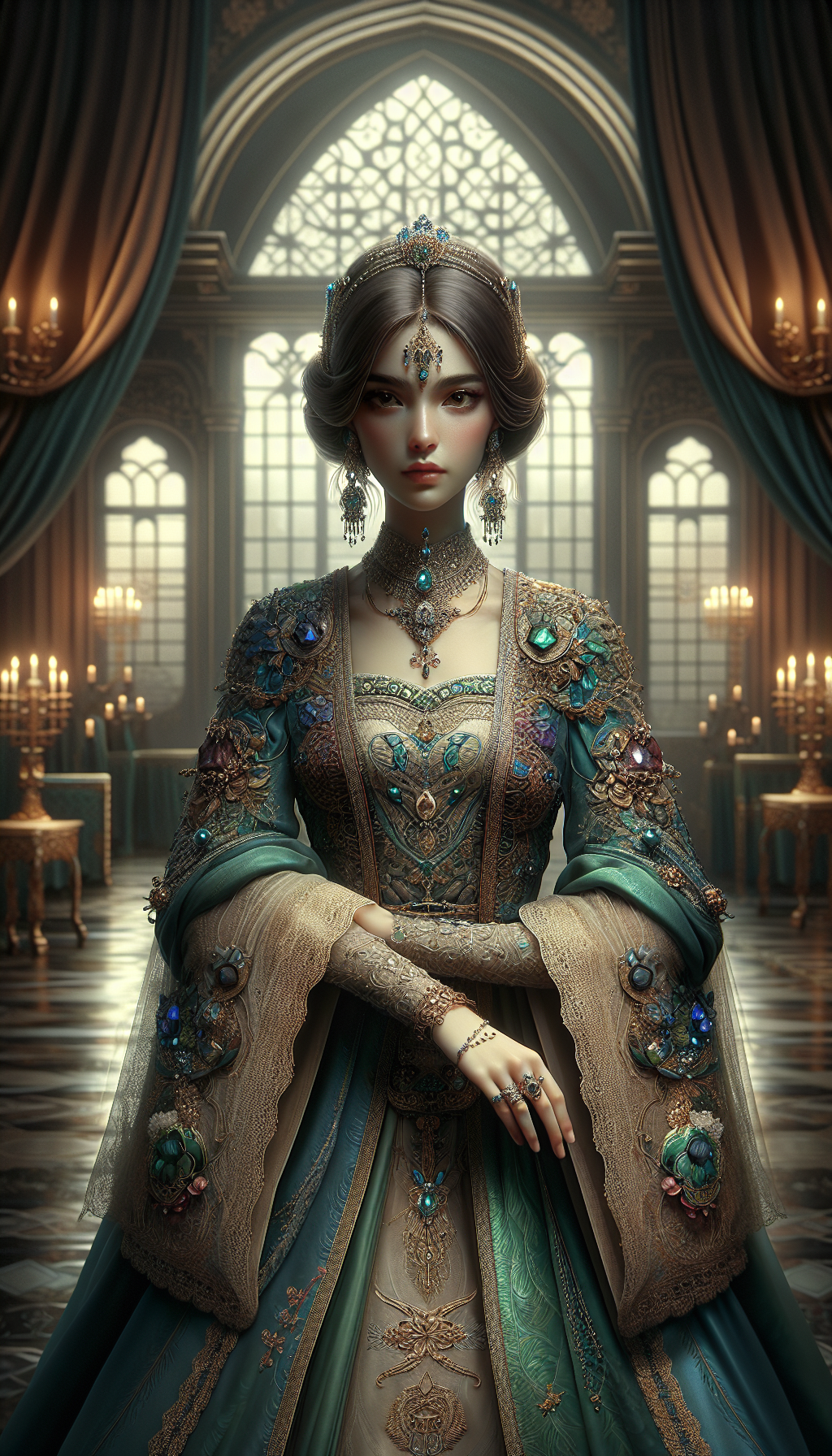
A collective title encompassing all women who hold or are connected to a noble title. The specific address varies with the spouse's rank — Baroness, Viscountess, Countess, Duchess, and so on. In some world settings, women may inherit titles in their own right, becoming independent domain nobles in their own names. In fantasy, the noblewoman is frequently depicted as a figure who conceals a razor-sharp political mind beneath a graceful exterior.
Origin
In feudal society, noble women were in principle barred from inheriting land and titles, but a system developed for exceptions when there were no direct male heirs. In the late Middle Ages, the property rights of noble women expanded progressively.
Features
- Uses a derivative title derived from her husband's or father's rank
- Is the practical agent of domain management, family diplomacy, and marriage negotiations
- Hosts aristocratic salons to exercise political influence
- May independently inherit the domain in the absence of a male heir
- Expresses identity and displays alliances through the family coat of arms
Usage
The hidden puppeteer of court politics. In fantasy, the noblewoman is the type who changes more with poison and eloquence than war ever could.
Weakness
In an environment with limited official voice, she can only exert influence through indirect means. The downfall of her spouse is her own undoing.
Female Ranks Rank List
Related Items

Dame
Intermediate女騎士 · Dame — A Female Warrior Who Earned Her Title by Sword and Oath
A woman who has been formally invested with knighthood through the knight's oath. Historically rare, but in fantasy worlds she is a common figure in holy orders, royal guards, and magic knight corps. 'Dame' is the official title granted to female knights in the British chivalric system; in Eastern fantasy she appears as a female general, wandering swordswoman, or Hwarang warrior. The Dame is frequently portrayed as a character caught between the codes of chivalry and the social expectations placed on women.

Princess
Supreme公主 · Princess — The King's Daughter, the Most Precious Bargaining Chip
The daughter of a king or emperor. A status conferred by bloodline rather than a hereditary title; her succession rights are often more restricted than a prince's. Yet in fantasy, the princess has been overwhelmingly reinterpreted not as a passive rescue target but as an active figure who takes up the sword, wields magic, or orchestrates political schemes herself. A princess's marriage sealed alliances between kingdoms — making the princess herself a 'living political asset.'
Baron
Intermediate男爵 · Baron — The First Step of the Hereditary Nobility
The lowest of the hereditary noble titles. The baron governs a small domain and the peasants attached to it, and owes military service to a superior lord as a vassal. A barony typically spans one to a few villages, and the baron himself exercises seigneurial judicial authority. In fantasy settings, this is the rank most often cast as an early-arc villain or local power figure.