
Flail
A chain-linked striking weapon that bypasses shields
The flail is a striking weapon with a metal ball (spiked or smooth) connected to a handle by a chain. Its chain-link structure allows strikes to wrap around or over an enemy's shield — its greatest advantage. The handle measures 40-60cm with a 30-50cm chain, totaling roughly 80-110cm. However, the flail's actual historical prevalence is debated among scholars. While depicted in medieval illustrations and texts, surviving examples are extremely rare, leading some historians to question its widespread use. Believed to have been weaponized from the agricultural threshing flail.
Origin
Believed to have been weaponized from the agricultural threshing flail in medieval Europe, appearing in 14th-16th century illustrations and records. Its historical prevalence remains debated due to extremely rare surviving examples.
Features
- Handle + chain + metal ball construction
- Flexible structure can strike around shields
- Handle 40-60cm, chain 30-50cm
- Evolved from agricultural threshing flail
- Historical prevalence debated — rare surviving examples
- Usable one-handed or two-handed
Usage
Used to bypass shield defenses by striking over or around the shield. Also effective at transmitting impact through armor.
Related
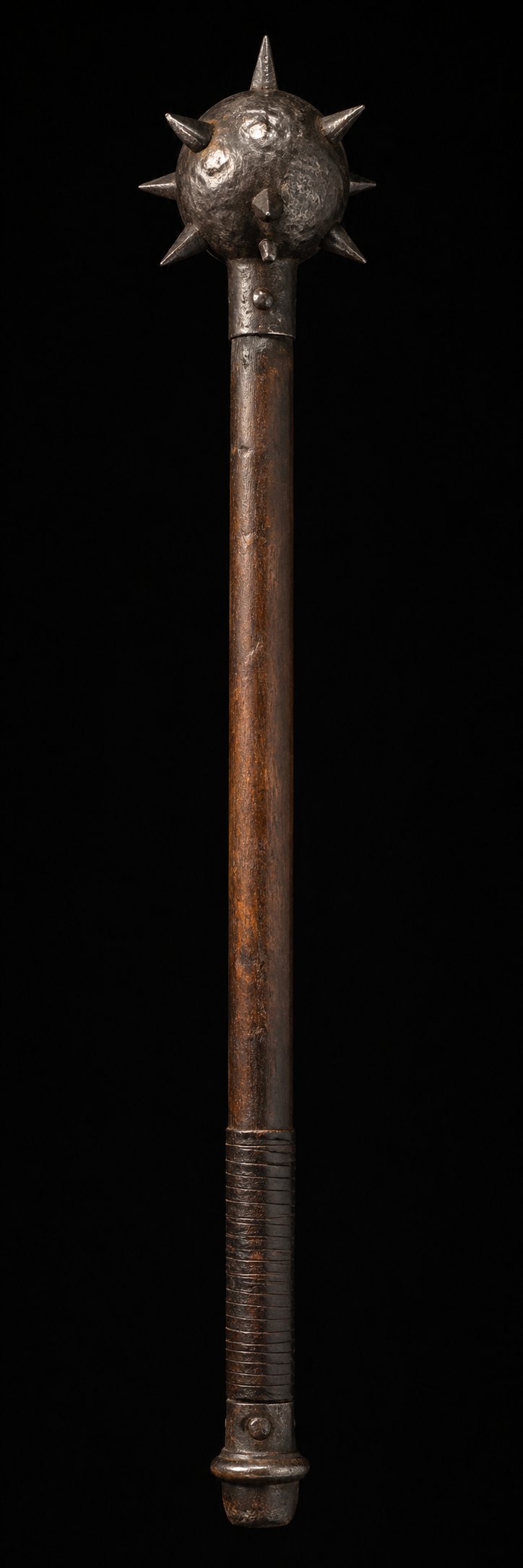
Morning Star
The spiked ball weapon of medieval warfare

Longsword
The quintessential two-handed sword of medieval Europe

Halberd
The versatile polearm combining axe, spear, and hook

Zweihänder
The massive two-handed sword of German Landsknechts

Battle Axe
An axe designed specifically for combat
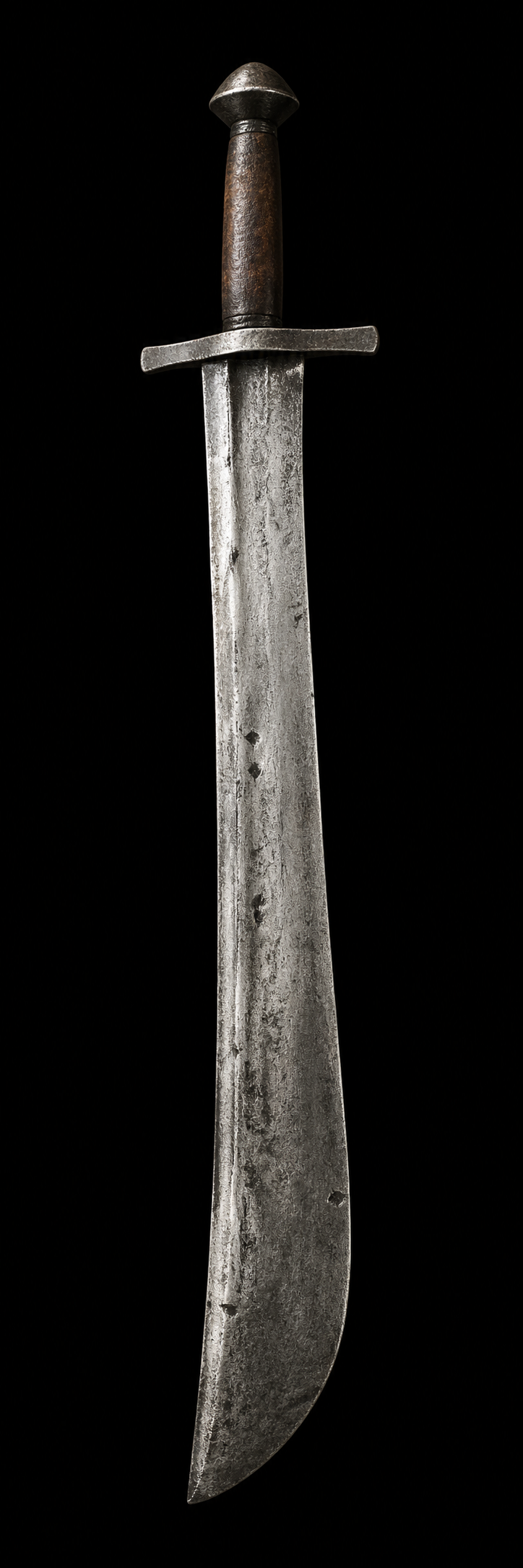
Falchion
A single-edged medieval European chopping sword

Claymore
The great two-handed sword of the Scottish Highlands

Pike
An extremely long spear for massed infantry formations

Glaive
A polearm with a curved single-edged blade

War Hammer
A blunt weapon designed to defeat plate armor

Mace
A flanged metal club effective against armor

Spear
Humanity's oldest weapon