
Shamshir
The curved cavalry saber of Persia
The shamshir is a deeply curved single-edged cavalry saber originating from Persia. With a blade of 80-90cm, its name meaning "lion's claw" reflects its extreme curvature optimized for mounted drawing cuts at full gallop. Forged from wootz (Damascus) steel with distinctive wavy surface patterns, its light weight enables rapid successive strikes. Particularly favored during the 16th-18th century Safavid and Ottoman empires.
Origin
Evolved from curved swords of the Sassanid Persian Empire (224-651), reaching its current extreme curvature during the 16th-century Safavid dynasty. Spread throughout the Ottoman Empire, Mughal Empire, and Central Asia.
Features
- Extremely curved single-edged blade (80-90cm)
- Wootz (Damascus) steel wavy patterns
- Curvature optimized for mounted drawing cuts
- Light weight for rapid successive strikes
- Rounded tip rather than pointed
- Ivory, horn, or precious metal grip decorations
Usage
Used for drawing cuts while galloping past enemies on horseback. The extreme curvature minimizes contact area while maximizing cutting efficiency.
Related

Longsword
The quintessential two-handed sword of medieval Europe
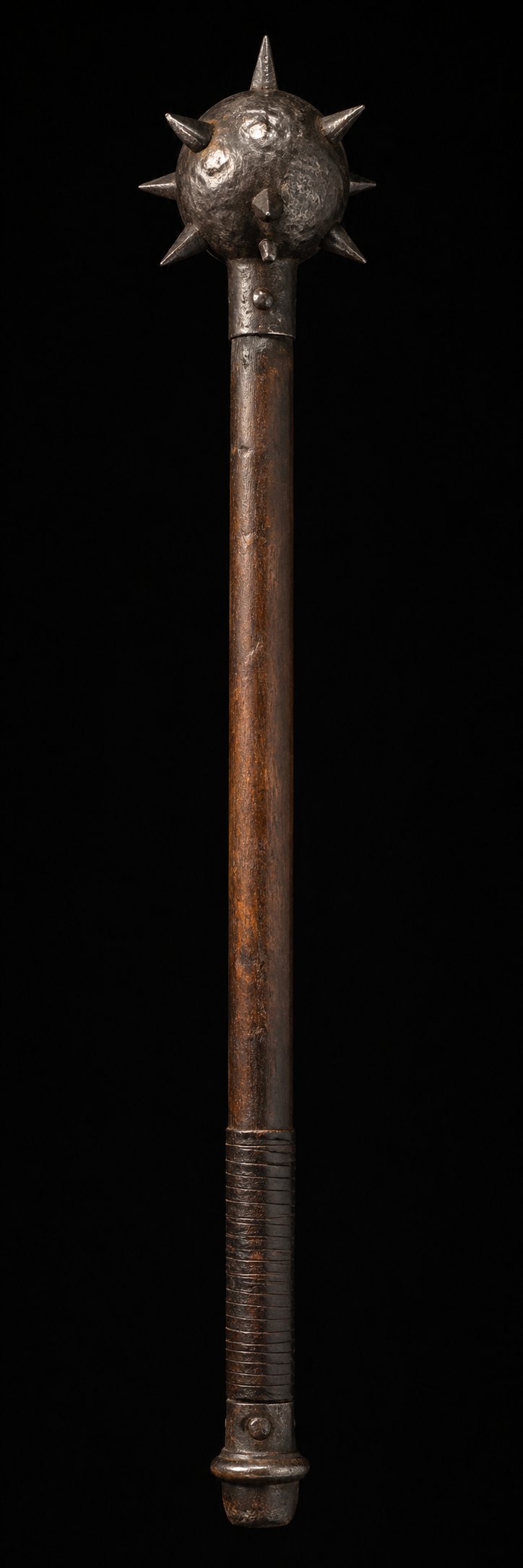
Morning Star
The spiked ball weapon of medieval warfare

Lance
The cavalry charge weapon of the mounted knight

War Hammer
A blunt weapon designed to defeat plate armor
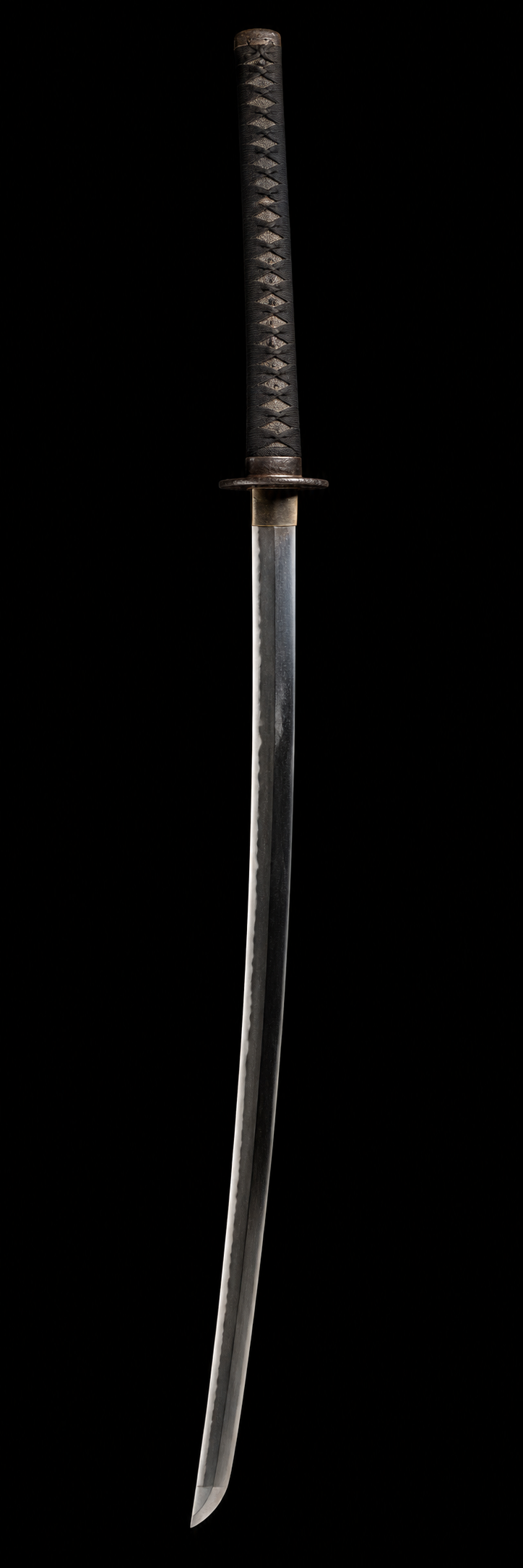
Katana
The iconic curved sword of the Japanese samurai

Sabre
The curved cavalry sword for slashing
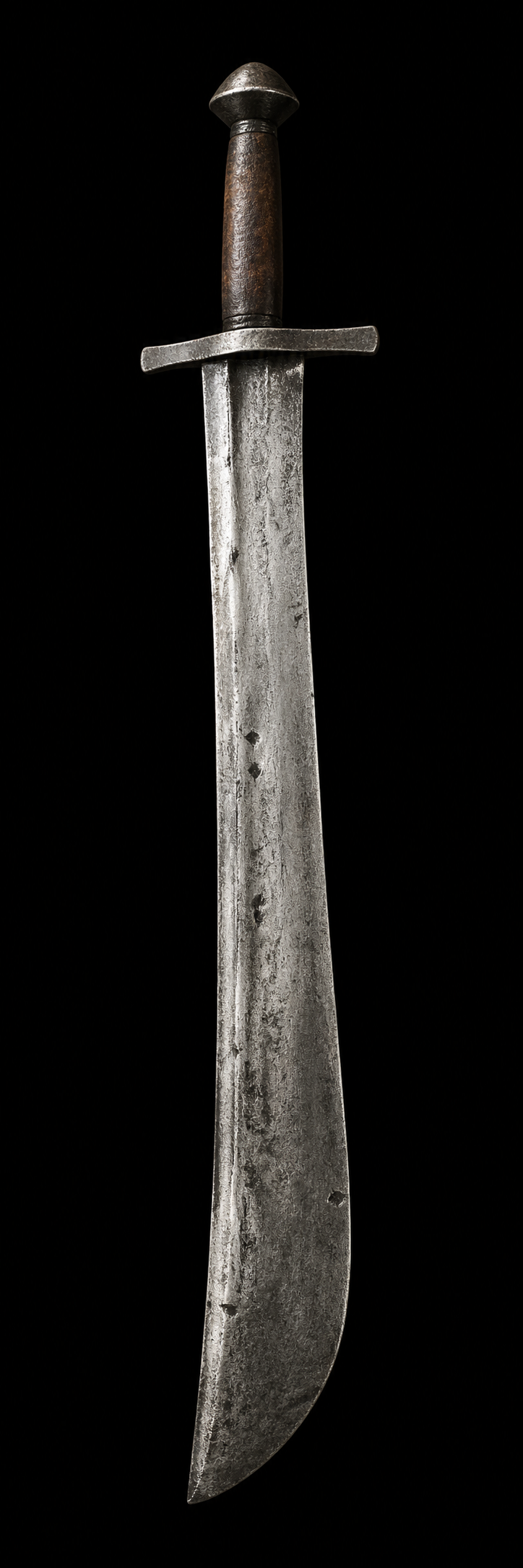
Falchion
A single-edged medieval European chopping sword

Dao
The iconic single-edged Chinese saber

Halberd
The versatile polearm combining axe, spear, and hook

Zweihänder
The massive two-handed sword of German Landsknechts

Longbow
The iconic weapon of the English archer

Crossbow
The mechanized ranged weapon of the medieval era