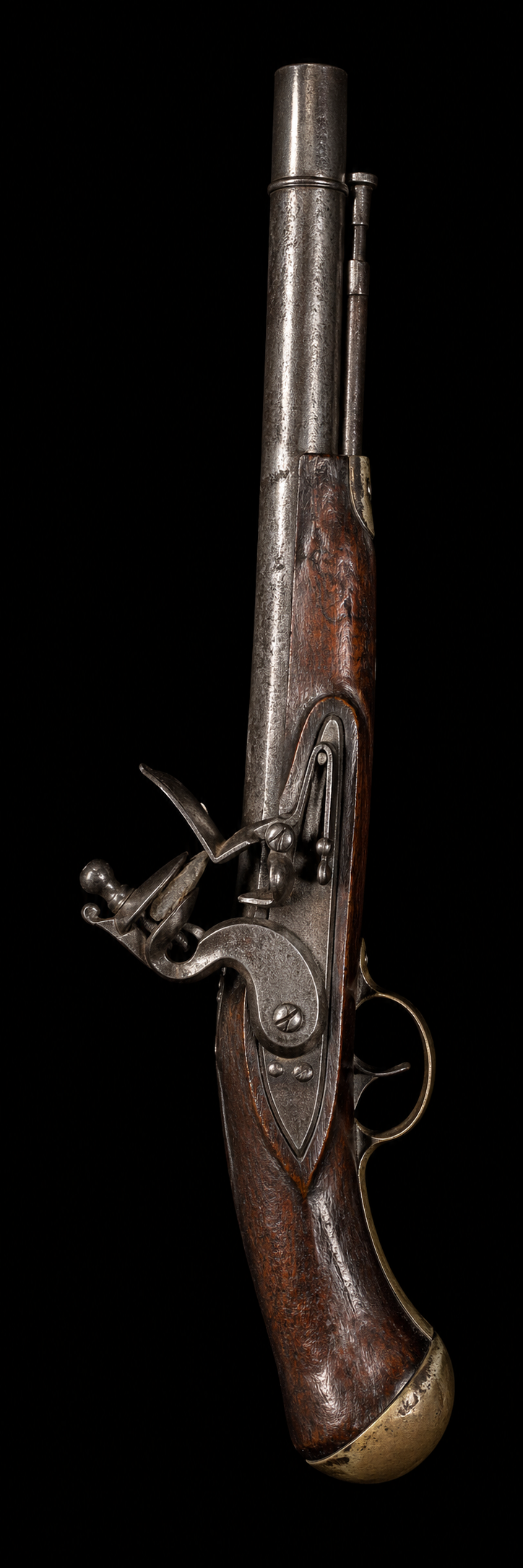
Flintlock Pistol
A single-shot pistol ignited by striking flint
The flintlock pistol fires by striking flint against steel to ignite gunpowder — a single-shot handgun. Widely used in 17th-19th century Europe, it is the iconic weapon of pirates and cavalry. With an effective range of only about 15m and just one shot, it was commonly flipped and used as a club after firing. Pirates carried multiple pistols strapped to their bodies, firing in succession before switching to swords. Also the standard dueling weapon — the Hamilton-Burr duel (1804) being among the most famous.
Origin
Born when the flintlock ignition mechanism, developed in early 17th-century France, was applied to pistols. Replaced earlier matchlock pistols and was widely issued for military and civilian use in the 17th-19th centuries.
Features
- Flint-spark ignition mechanism
- Single-shot — reload required after each firing
- Effective range approximately 15m
- Used as a club after firing
- Iconic weapon of pirates and cavalry
- Standard dueling weapon
Usage
Cavalry fired at enemies just before charging, while pirates fired multiple pistols in succession before switching to swords. Also the standard weapon for honor duels.
Related
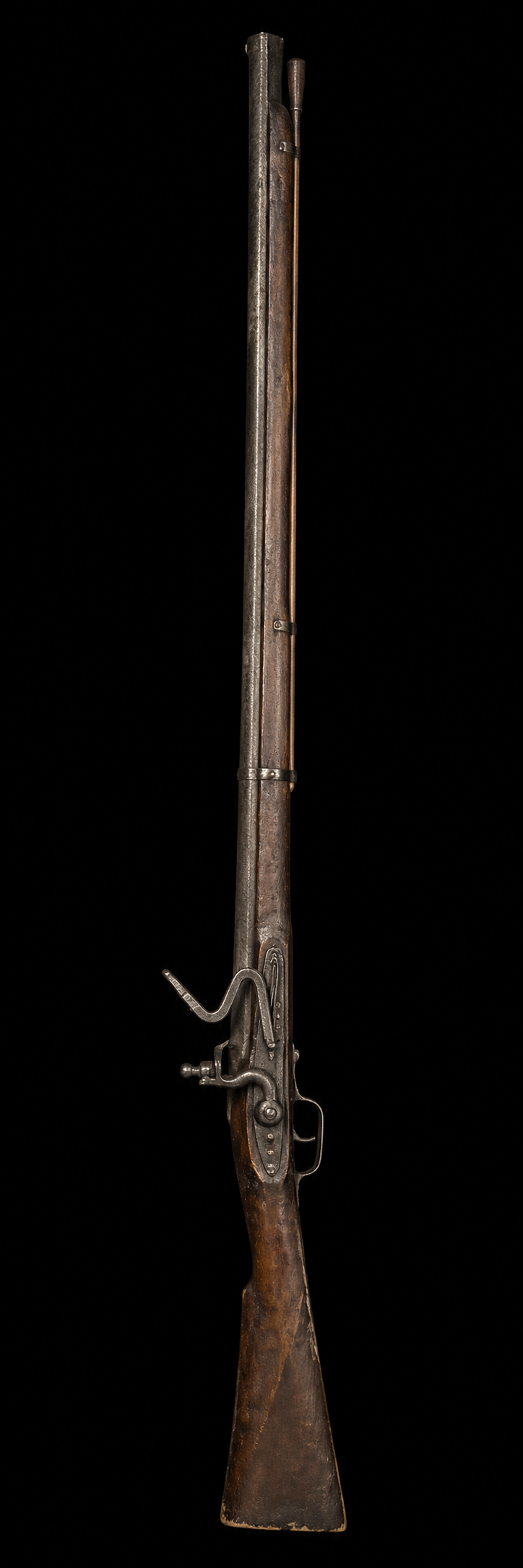
Musket
The muzzle-loading firearm of the early modern era

Sabre
The curved cavalry sword for slashing

Rapier
A thrust-oriented slender sword of Renaissance Europe

Longsword
The quintessential two-handed sword of medieval Europe

Halberd
The versatile polearm combining axe, spear, and hook

Spear
Humanity's oldest weapon
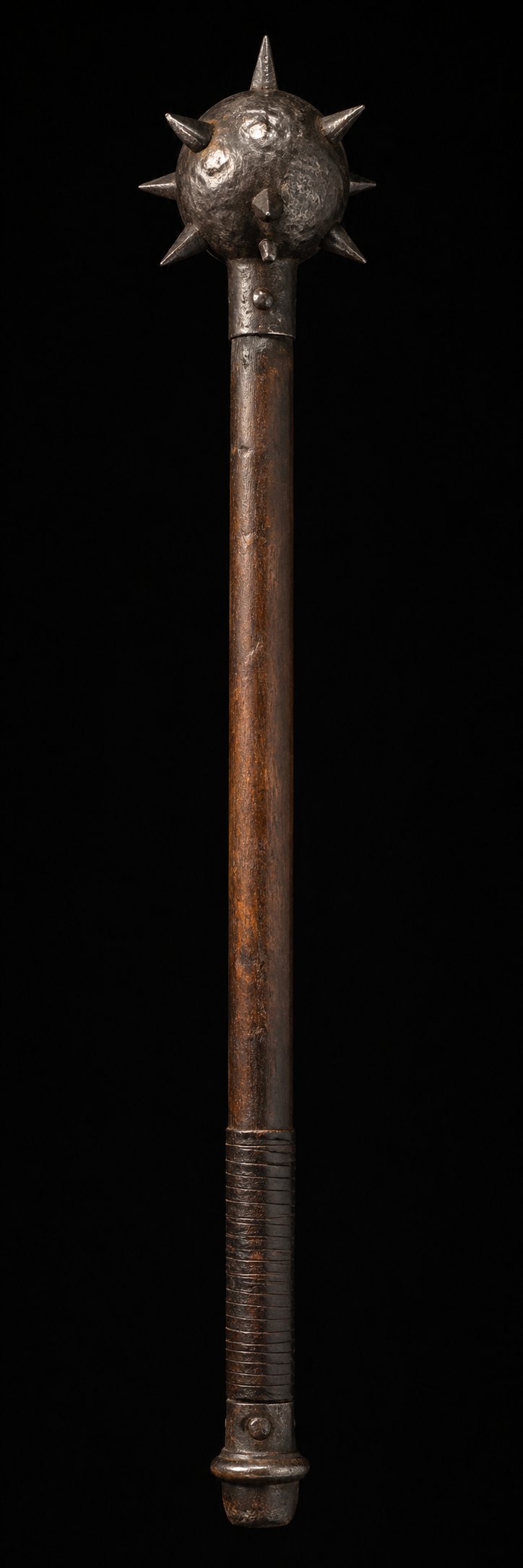
Morning Star
The spiked ball weapon of medieval warfare

Zweihänder
The massive two-handed sword of German Landsknechts

Longbow
The iconic weapon of the English archer

Crossbow
The mechanized ranged weapon of the medieval era

Battle Axe
An axe designed specifically for combat

Lance
The cavalry charge weapon of the mounted knight