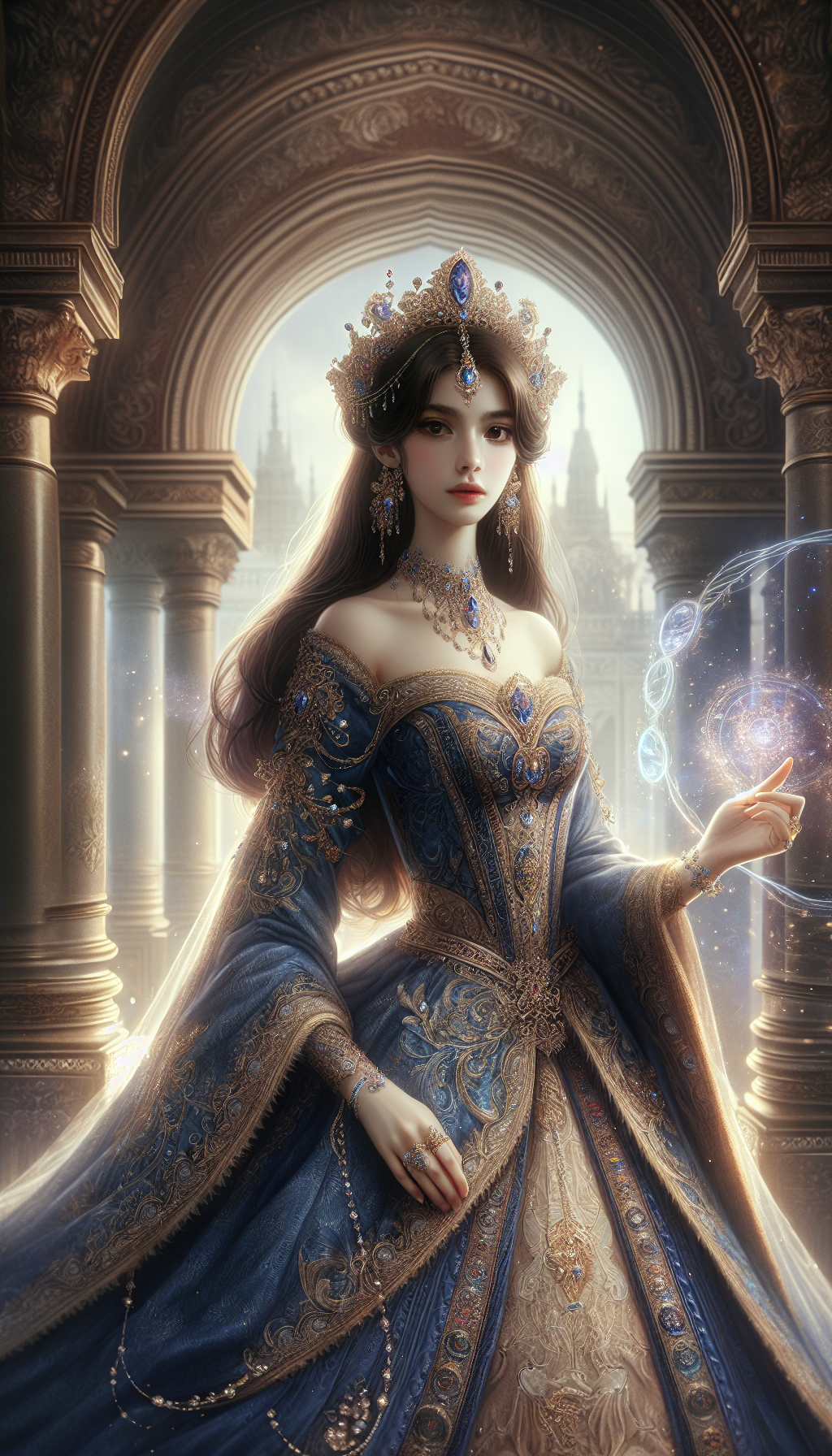
The daughter of a king or emperor. A status conferred by bloodline rather than a hereditary title; her succession rights are often more restricted than a prince's. Yet in fantasy, the princess has been overwhelmingly reinterpreted not as a passive rescue target but as an active figure who takes up the sword, wields magic, or orchestrates political schemes herself. A princess's marriage sealed alliances between kingdoms — making the princess herself a 'living political asset.'
Origin
A title for the female children of the royal bloodline that developed independently in both East and West. It manifests in diverse forms: China's Gongzhu (公主), Europe's Princess, and Korea's Gongju and Ongju system.
Features
- The highest female status conferred by royal bloodline
- A primary party to diplomatic marriages — dynastic alliances are sealed through her union
- Succession rights (restricted or equal, depending on the world's rules)
- Royal education — trained in languages, diplomacy, arts, and magic (in fantasy settings)
- May come to govern her own domain or attain the position of Crown Princess
Usage
One of the most common female protagonist archetypes in fantasy. The spectrum runs wide — from rescue narratives to stories of an active adventurer.
Weakness
The reality of being treated as an instrument of political marriage. Structural inequality in being excluded from the succession.